
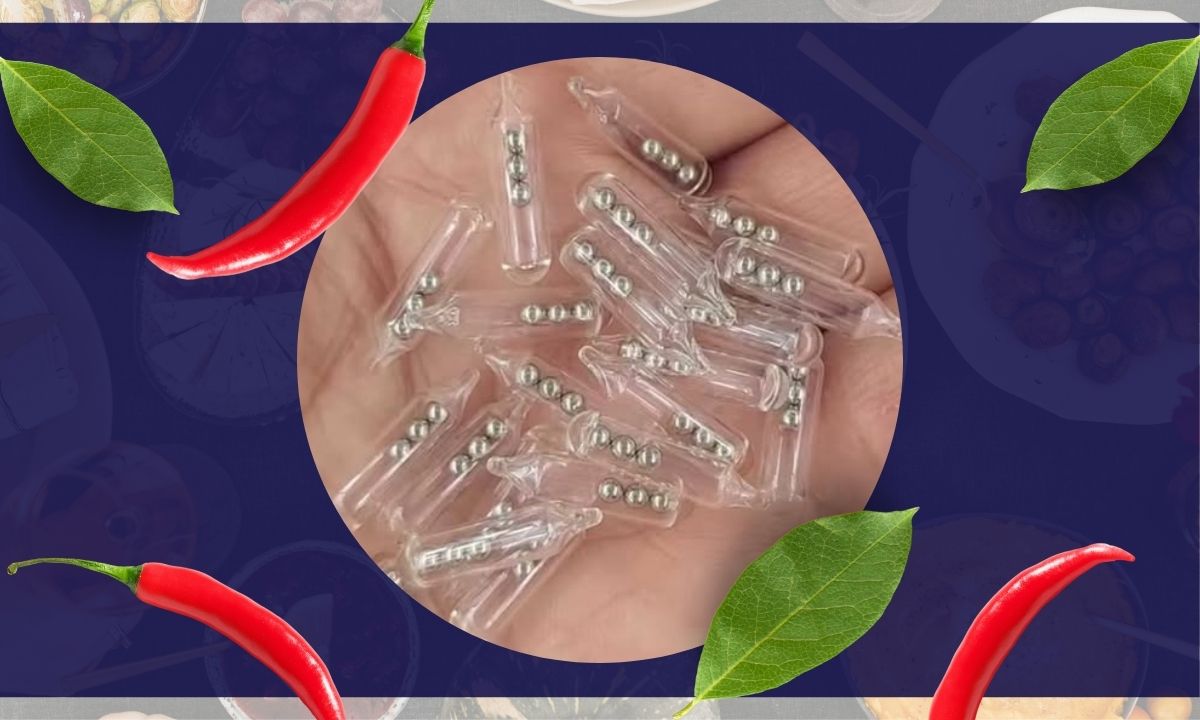
A simple look at what small glass tubes with shiny metal balls inside might be, and why someone might keep them.
Explain
Sometimes we find unusual objects in old drawers or boxes, and they make us wonder what they were used for. The small clear tubes with metal balls inside may look strange, but they often have practical or scientific uses.
Article
Finding a bag of strange glass tubes can feel like discovering a hidden treasure. At first glance, they don’t look like everyday household items. Instead, they seem like something connected to science, engineering, or teaching.
One common use for these tubes is science demonstrations. Teachers and hobbyists often use sealed tubes with ball bearings to show how motion, gravity, or magnetism works. Because the tubes are clear, you can easily watch the balls move inside, making them great for learning.
Another possibility is that they are mechanical parts. Ball bearings are used in machines to reduce friction, and sometimes they are stored in protective tubes. If your uncle had an interest in engineering, he may have kept them as spares or samples.
They could also be part of a vintage science kit. In the past, educational sets often included unusual items like magnets, capsules, or chemical vials. Collectors today find these items fascinating because they show how science was taught decades ago.
Of course, there’s also the chance that your uncle simply liked collecting curious objects. The shiny balls inside the clear tubes look unusual and eye-catching, so they might have been kept as conversation pieces.
Whatever their exact purpose, these tubes are most likely linked to science or engineering, not medicine or everyday use. If you want to know more, you could show them to a local science teacher, museum, or workshop. Experts might recognize them right away.
Tips
- Handle the tubes carefully, as they may be fragile.
- Don’t try to open them — they may lose value or break.
- Ask a science museum or teacher for help identifying them.
- If they are old, they might even be collectible.
- Keep them as a memory of your uncle’s interests.