
We’ve all been there. After a long, grueling day at work, you finally walk through your front door. Your joints are aching, your brain is fried, and the only thing on your mind is diving under the covers for some well-deserved rest.
But just as you approach your bed to turn down the sheets, something catches your eye in the narrow gap between your mattress and the wall.
You freeze.
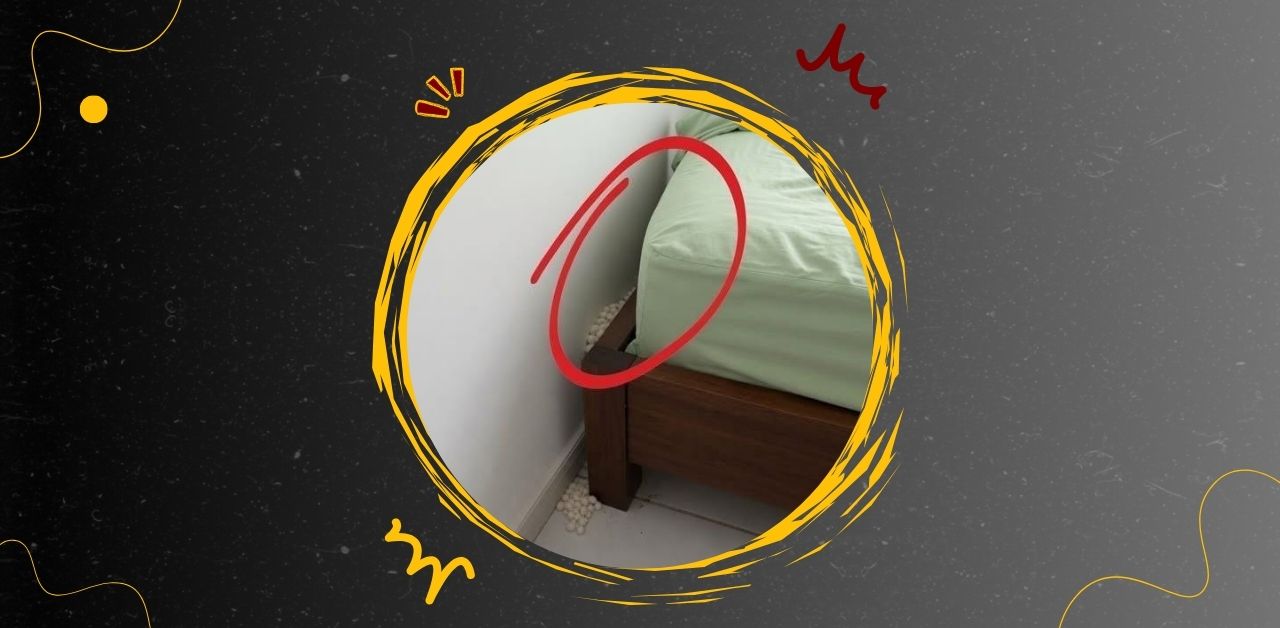
There, pooled on the floor and spilling out from behind the headboard, is a strange, clustered mass of tiny white spheres. In the dim evening light, your mind immediately races to the worst-case scenarios. Is it a massive cluster of exotic insect eggs? Is it some sort of bizarre, invasive fungus growing out of the drywall?
If you’ve recently discovered a mysterious pile like the one shown in image_6ccb64.jpg, it is completely normal to feel a sudden jolt of panic. But before you call an exterminator or pack your bags to move out, take a deep breath.
Here is the real story behind this unsettling bedroom mystery—and exactly how to handle it.
The Mystery Solved: What Actually Is It?
Despite looking like something out of a sci-fi thriller, the strange white substance in image_6ccb64.jpg is entirely man-made and completely harmless.
They are expanded polystyrene (EPS) beads, commonly known as Styrofoam pellets.
If you are seeing these accumulate on your bedroom floor, it isn’t a sign of a pest infestation. Instead, it means a piece of household comfort item has met an unfortunate end. These tiny, lightweight beads are the standard filling used in:
-
Bean bag chairs and floor cushions
-
Maternity or nursing pillows
-
Travel neck pillows
-
Plush stuffed animals and novelty toys
How Did They Get Behind the Bed?
Polystyrene beads are incredibly unique—and frustrating—because they are practically weightless and highly susceptible to static electricity.
If a bean bag or travel pillow tucked near your bed develops even the tiniest tear or a slightly unzipped seam, these micro-beads will begin to escape. Because they are so light, the slightest draft from a ceiling fan, an air conditioner, or even the movement of your bedsheets will cause them to drift silently across the floor, naturally pooling into tight corners, baseboards, and dark gaps like the ones behind your bed frame.
The Nightmare Clean-Up (And How to Do It Right)
If you have ever tried to sweep up Styrofoam beads with a standard broom, you know it quickly turns into a comedy of errors. The static charge causes them to cling to the broom bristles, stick to your hands, and literally fly away when you try to corral them.
To clean up a spill like the one in image_6ccb64.jpg without losing your sanity, try these two pro-tips:
1. The Sock-on-a-Vacuum Trick
If you want to salvage the beads to put back into your pillow, take a clean stocking, tights, or a thin mesh sock and place it over the nozzle of your vacuum cleaner hose. Secure it tightly with a rubber band, then push a portion of the sock inside the tube. Turn the vacuum on. The beads will be sucked up and caught in the sock without entering the vacuum bag or chamber. Once full, turn it off over a trash can or container and let them drop.
2. Mist the Area with Water
If you just want to throw them away, lightly mist the pile with a spray bottle filled with water or a tiny bit of liquid fabric softener. Eliminating the static electricity instantly grounds the beads, making them easy to wipe up with a damp cloth or sweep into a dustpan without them scattering.
Final Thoughts
While finding unexpected anomalies near your place of sleep is enough to give anyone a scare after a long day, you can rest easy knowing that your house isn’t under siege. Check your decorative pillows, patch up that leaking bean bag, and you can finally get the peaceful night’s sleep you were looking for!