
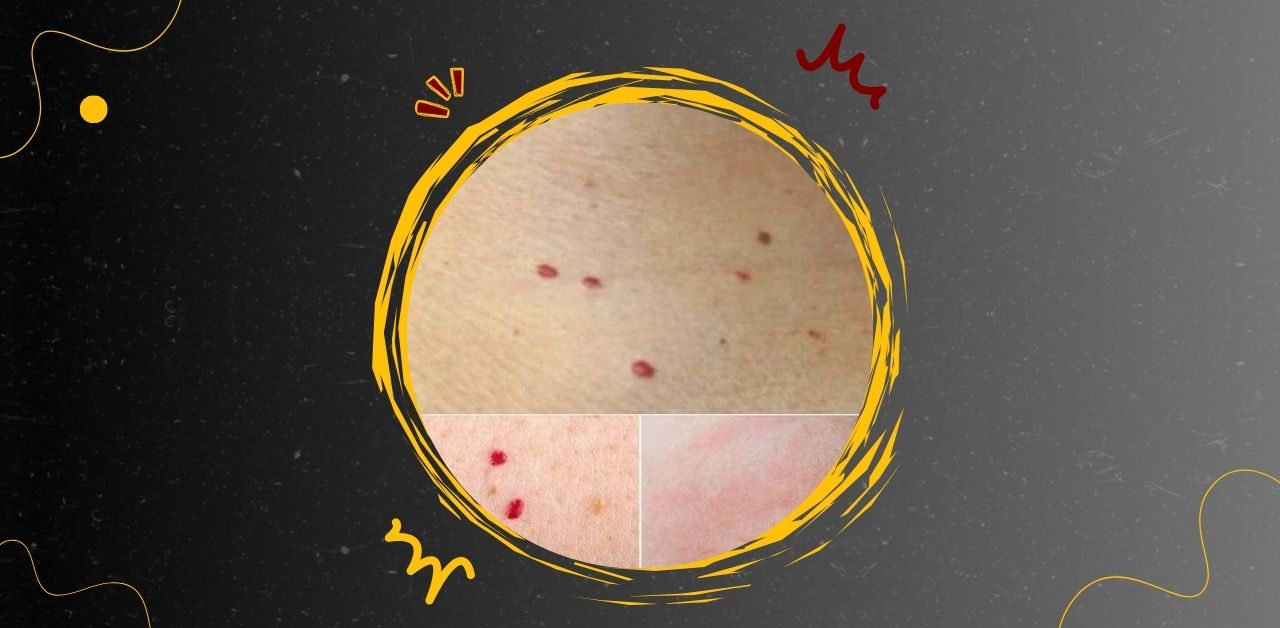
If you’ve noticed small, bright red dots on your skin — often round, smooth, and slightly raised — you’re not alone. These marks are commonly known as cherry angiomas, and they’re one of the most frequent benign skin growths that appear as we age. While they can look alarming, they’re usually harmless and not a cause for concern.
🔍 What Are Cherry Angiomas?
Cherry angiomas are tiny clusters of blood vessels that form near the surface of the skin. They can range in color from bright red to deep burgundy and vary in size from a pinhead to about a quarter of an inch. They often appear on the chest, arms, shoulders, or back, though they can show up anywhere.
🧬 Why Do They Appear?
The exact cause isn’t fully understood, but several factors are known to contribute:
- Aging — They become more common after age 30.
- Genetics — If your parents have them, you’re more likely to develop them too.
- Hormonal changes — Pregnancy or hormonal fluctuations can trigger their appearance.
- Sun exposure — UV rays may play a role in skin vessel changes.
- Certain chemicals or medications — Some substances can irritate or affect blood vessels.
⚠️ When to Pay Attention
Cherry angiomas are typically harmless, but you should consult a dermatologist if:
- The spots change color or shape.
- They bleed frequently or become painful.
- You notice a sudden increase in number or size.
These changes could indicate another skin condition that needs evaluation.
💡 How to Manage or Remove Them
Most people leave cherry angiomas alone, but if they’re bothersome or cosmetically unwanted, a dermatologist can remove them safely using:
- Laser therapy — targets and seals the blood vessels.
- Cryotherapy — freezes the angioma with liquid nitrogen.
- Electrocauterization — burns the spot gently to remove it.
Avoid trying to remove them at home — improper methods can cause infection or scarring.
🌿 Natural Care Tips
While you can’t prevent cherry angiomas entirely, maintaining healthy skin may reduce their appearance:
- Keep your skin hydrated and protected from sun exposure.
- Eat antioxidant‑rich foods like berries, leafy greens, and citrus fruits.
- Stay active to support circulation and vascular health.
🧘 Final Thoughts
Those tiny red dots are usually harmless signs of aging or genetics, not a disease. Still, it’s wise to keep an eye on your skin and seek medical advice if anything looks unusual. Healthy habits, hydration, and regular check‑ups can help you maintain clear, vibrant skin.