
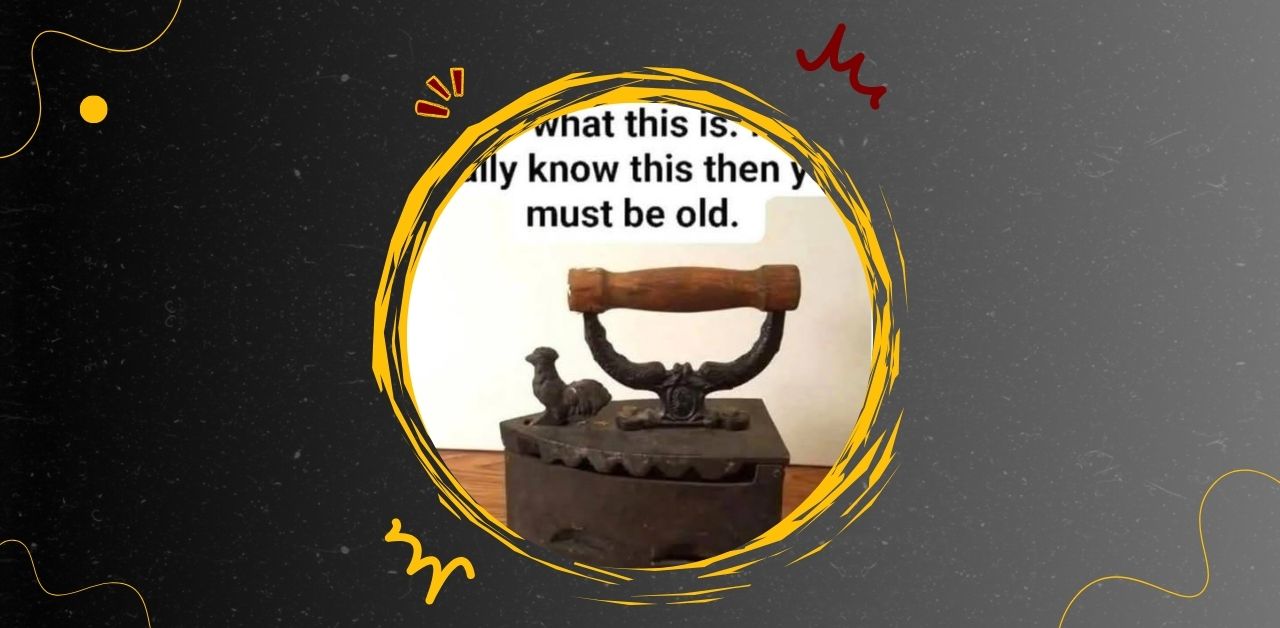
The object in the photo is a fascinating piece of history — a charcoal box iron, also known as a coal iron. Before electric irons became common, this heavy, metal device was used to press clothes using heat generated from burning charcoal placed inside its hollow chamber. It’s a relic from a time when household chores required both skill and patience, and it remains a symbol of craftsmanship and durability.
⚙️ How It Worked
The charcoal iron was designed with a metal body and a wooden handle to protect the user’s hand from heat. The top lid opened to reveal a compartment where hot charcoal was placed. As the charcoal burned, it produced heat that transferred through the iron’s base, allowing it to smooth out wrinkles in fabric.
To maintain airflow and keep the charcoal burning, small vent holes were built into the sides or front of the iron. Some models even had a small chimney or decorative figure — like the one in the photo — to help release smoke and regulate temperature.
🧩 Design and Features
- Material: Cast iron or brass for durability and heat retention.
- Handle: Wooden, to prevent burns.
- Ventilation: Holes or flaps to allow oxygen flow.
- Lid latch: Often shaped decoratively, sometimes featuring animals or ornate patterns.
- Weight: Much heavier than modern irons, requiring effort to use.
The design was both functional and artistic. Many irons were handcrafted, making each piece unique.
🕰️ Historical Significance
Charcoal irons were widely used in the late 19th and early 20th centuries, especially in regions without electricity. They were common in Asia, Africa, and Europe, serving as essential household tools. In some rural areas, they remained in use well into the mid‑20th century.
Before charcoal irons, people used flat irons — solid metal pieces heated directly on stoves or fires. The charcoal iron was a major improvement because it maintained heat longer and more evenly.
💨 Challenges and Safety
Using a charcoal iron required caution. The burning charcoal produced smoke and carbon monoxide, so ironing was often done outdoors or near open windows. Users had to manage the heat carefully — too much could scorch fabric, too little would be ineffective.
Despite these challenges, the charcoal iron represented innovation and practicality in its time.
🧵 Legacy and Collectible Value
Today, charcoal irons are cherished as vintage collectibles and decorative antiques. They remind us of a simpler era when household tools were built to last. Many people display them as rustic home décor or use them in museums to showcase domestic history.
Collectors value them for their craftsmanship, weight, and historical charm. Some artisans even repurpose them into creative items like bookends, planters, or candle holders.
🌟 Final Thoughts
The charcoal box iron is more than just an old household tool — it’s a testament to human ingenuity before electricity transformed daily life. It symbolizes endurance, tradition, and the beauty of manual craftsmanship.
If you recognize this object, it means you’ve seen a piece of history that helped shape modern living. It’s not just a sign of age — it’s a sign of appreciation for how far technology has come.