
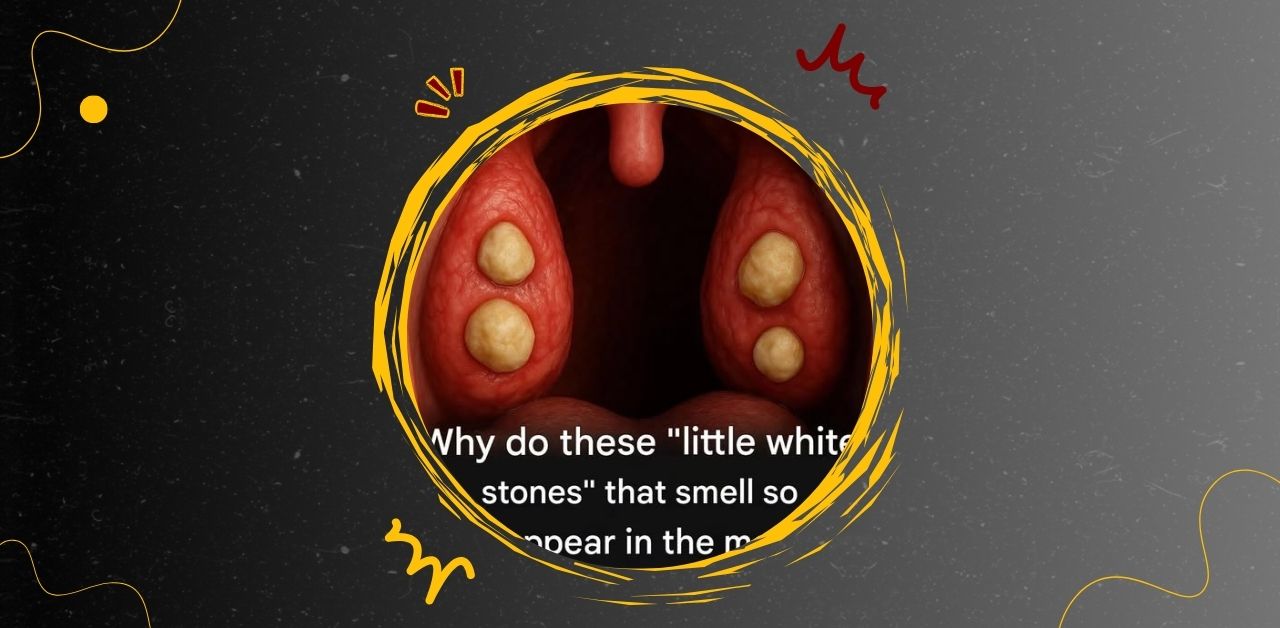
Those small, foul‑smelling white or yellowish lumps that sometimes appear at the back of the throat are called tonsil stones, or tonsilloliths. They form in the crevices of the tonsils — the soft tissue at the back of your mouth — and are made up of trapped debris, bacteria, and dead cells. Though they look alarming, they’re usually harmless, but they can cause discomfort and bad breath.
🔬 What Causes Tonsil Stones
The tonsils have tiny pockets called crypts that help trap bacteria and particles to protect your body from infection. When food particles, mucus, and dead cells get stuck in these crypts, they can harden over time, forming small calcified lumps.
Common causes include:
- Poor oral hygiene — allows bacteria and debris to accumulate.
- Chronic tonsillitis — repeated inflammation enlarges the crypts.
- Post‑nasal drip — mucus from the nose can settle in the throat.
- Dry mouth — reduces saliva, which normally helps wash away debris.
😷 Symptoms
Tonsil stones can vary in size — from tiny grains to larger lumps. Some people don’t notice them at all, while others experience:
- Persistent bad breath (halitosis)
- A feeling of something stuck in the throat
- Sore throat or irritation
- Difficulty swallowing
- Ear pain (due to shared nerve pathways)
💨 Why They Smell So Bad
The unpleasant odor comes from bacteria that feed on trapped debris. As they break down proteins, they release sulfur compounds — the same chemicals responsible for bad breath.
🧼 How to Prevent Tonsil Stones
- Maintain oral hygiene — brush teeth and tongue twice daily, and rinse with mouthwash.
- Stay hydrated — saliva helps flush out bacteria.
- Gargle with salt water — reduces bacteria and soothes the throat.
- Avoid smoking — it dries the mouth and promotes bacterial growth.
- Eat crunchy fruits and vegetables — they help clean the mouth naturally.
🩺 Treatment Options
Small tonsil stones often dislodge on their own when you cough or swallow. For larger or persistent ones:
- Manual removal: Gently use a cotton swab or water flosser.
- Medical removal: An ENT specialist can extract them safely.
- Tonsillectomy: In severe or chronic cases, surgical removal of the tonsils may be recommended.
🌿 Natural Remedies
- Gargle with apple cider vinegar diluted in water to help dissolve stones.
- Use warm salt water daily to cleanse the tonsils.
- Chew raw garlic occasionally — its antibacterial properties help reduce buildup.
⚠️ When to See a Doctor
If you experience persistent pain, swelling, or recurring stones, consult a healthcare professional. Chronic tonsil stones may indicate ongoing infection or enlarged tonsils that need medical attention.
🌸 Final Thoughts
Tonsil stones are a common but often overlooked condition. They’re not dangerous, but they can be uncomfortable and embarrassing due to odor. With proper oral hygiene and hydration, you can prevent them from forming and keep your mouth feeling fresh and healthy.