
That “pins and needles” sensation in your hands, often called paresthesia, is a very common experience. While it frequently happens simply because you’ve “fallen asleep” on your arm, persistent or recurring numbness is often your body’s way of signaling that a nerve is being compressed, irritated, or lacks proper blood flow.
Understanding the root cause is the first step toward finding relief and preventing long-term nerve damage.
Common Causes of Hand Numbness
1. Nerve Compression (Carpal Tunnel Syndrome)
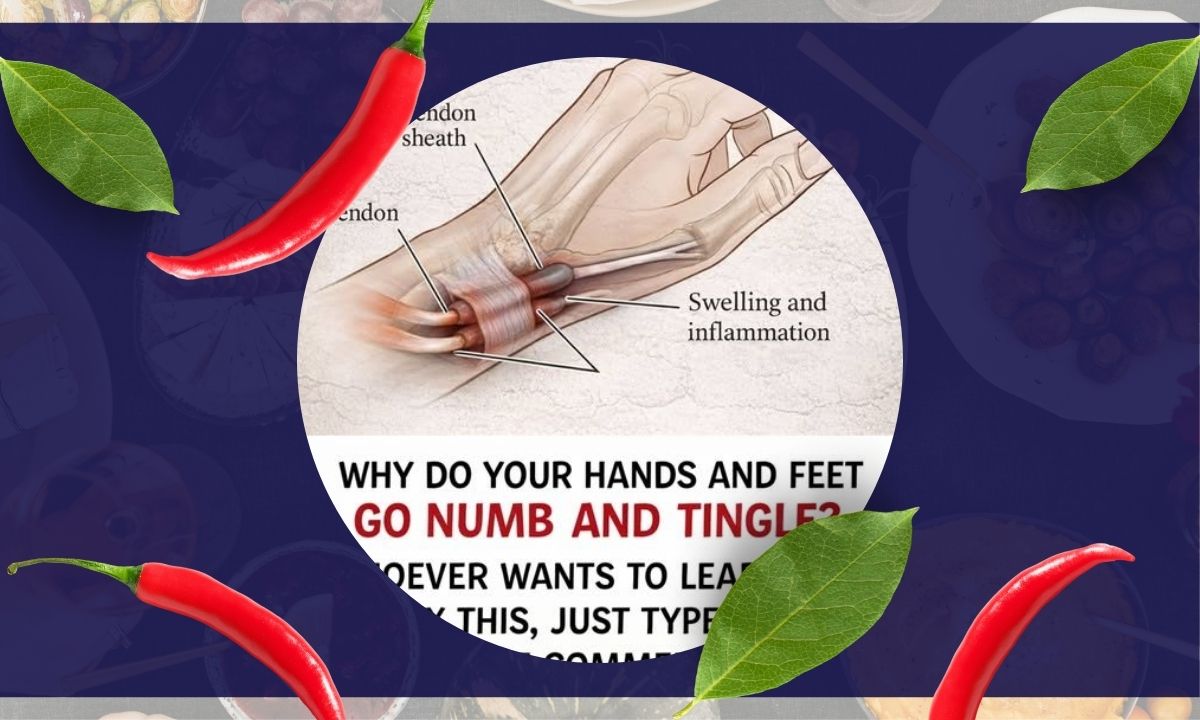
As illustrated in your shared diagram, the tendon sheath can become inflamed, leading to swelling in the narrow “tunnel” of your wrist. This puts pressure on the median nerve.
- Symptoms: Numbness primarily in the thumb, index, and middle fingers, often worse at night or while holding a phone/steering wheel.
2. Cubital Tunnel Syndrome
This occurs when the ulnar nerve (the “funny bone” nerve) is compressed at the elbow.
- Symptoms: Tingling or numbness specifically in the pinky and ring fingers.
3. Cervical Radiculopathy (Pinched Nerve in Neck)
Sometimes the problem isn’t in your hand at all. If a disc in your upper spine is herniated or misaligned, it can compress the nerves that travel down your arm.
- Symptoms: Numbness accompanied by sharp pain radiating from the neck or shoulder down to the hand.
4. Vitamin Deficiencies
Nerves require specific nutrients to maintain their protective coating (myelin). A significant deficiency in Vitamin B12 is a leading cause of peripheral neuropathy.
- Symptoms: Symmetric numbness in both hands and feet, often described as a “stocking-glove” pattern.
Is It a Circulation Issue?
While many social media posts link tingling to “collapsing circulation,” true circulatory numbness is usually accompanied by physical changes you can see:
- Temperature: The hand feels icy cold to the touch.
- Color: The skin may turn pale, blue, or blotchy.
- Pulse: A weakened pulse at the wrist.
When to Seek Immediate Medical Help
Numbness can occasionally be a symptom of a more serious neurological event. Seek emergency care if the numbness is:
- Sudden and one-sided: Occurring only on one side of the body.
- Accompanied by weakness: Inability to lift the arm or a drooping face.
- Followed by confusion: Difficulty speaking or a sudden, severe headache.
Quick Explain: Nerve Signal Transmission
Your nerves act like electrical wires. When a nerve is compressed (like the swelling shown in the tendon sheath diagram), the electrical signals are blocked. When the pressure is released, the “pins and needles” sensation is actually the nerve “re-firing” as it resumes its normal signaling. It takes about 15–30 minutes for a temporary compression to fully resolve once the pressure is removed.
How to Manage Mild Symptoms at Home
| Method | Why it Works |
| Wrist Bracing | Keeps the wrist in a neutral position, especially during sleep. |
| Ergonomic Adjustments | Changing your keyboard or mouse position reduces repetitive strain. |
| Anti-Inflammatory Diet | Foods rich in Omega-3s and antioxidants can reduce tendon swelling. |
| Nerve Gliding Exercises | Gentle stretches that help the nerve slide smoothly through its tunnels. |
Note
If you are experiencing persistent tingling along with “heavy legs” or fatigue, it is essential to have your blood sugar levels and Vitamin B12 levels checked by a professional. These are common, treatable causes that are often overlooked.