
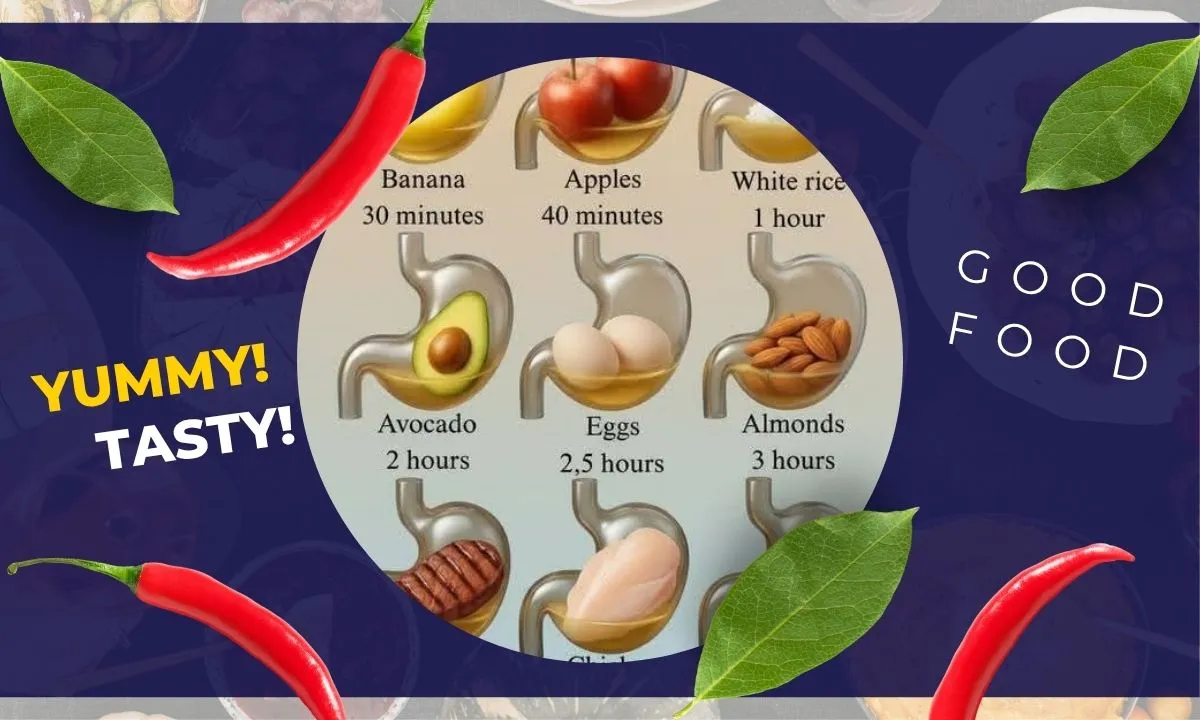
Have you ever wondered why a fruit salad leaves you feeling hungry an hour later, while a steak dinner keeps you full until morning? The answer lies in the complex mechanics of your digestive system. Digestion is not a “one size fits all” process; the time it takes for food to leave your stomach depends entirely on its chemical makeup—specifically its levels of fiber, fat, protein, and simple sugars.
Understanding these timelines can help you better plan your meals for sustained energy, athletic performance, or even weight management. Here is a breakdown of how long common foods typically stay in the stomach.
The Fast Track: Simple Carbs and Fruits
Foods that are high in water and simple sugars require very little mechanical breakdown. Your stomach acts more like a funnel for these items, moving them quickly into the small intestine where nutrient absorption begins.
- Bananas (30 Minutes): Often called the perfect “pre-workout” snack, bananas are broken down rapidly, providing a quick spike in blood glucose for immediate energy.
- Apples (40 Minutes): While they contain more fiber than a banana, apples are still primarily water and fructose, moving through the gastric system in less than an hour.
- White Rice (1 Hour): Because white rice has been stripped of its fibrous husk (bran), it is a simple starch that the stomach processes much faster than brown rice or whole grains.
The Middle Ground: Healthy Fats and Light Proteins
Once you introduce fats and proteins, the stomach slows down. It must mix these foods with gastric juices and enzymes to break them into smaller peptides and fatty acids.
- Avocado (2 Hours): Despite being a fruit, the high healthy fat content in avocados significantly slows down digestion compared to an apple. This is why avocados are so effective at keeping you satiated.
- Eggs (2.5 Hours): A standard breakfast staple, eggs provide a moderate amount of protein and fat. They provide a “slow-release” energy that avoids the mid-morning crash associated with sugary cereals.
- Almonds (3 Hours): Nuts are dense. The combination of plant-based protein, healthy fats, and tough fiber means the stomach has to work overtime to turn them into a liquid state (chyme).
The Slow Burn: Complex Proteins and Dairy
Heavy proteins and high-fat dairy are the “heavyweights” of the digestive world. These foods can stay in the stomach for several hours, which is why they provide the highest level of fullness (satiety).
- Steak and Chicken (3.5 Hours): Animal proteins are structurally complex. The stomach must use high levels of acid and pepsin to unravel these proteins. Red meat, due to its fat content, often takes slightly longer to process than lean poultry.
- Cheese (3.5 Hours): High-fat dairy products like cheese are among the slowest to digest. The combination of casein protein and milk fats creates a slow-moving mass that requires significant time to break down.
Key Factors That Influence Your Speed
While the averages above are a great guide, your “gastric emptying” rate can be affected by several external factors:
- Liquid vs. Solid: Liquids (like smoothies or soups) always digest faster than solid chunks of food.
- Food Combinations: If you eat a banana (30 mins) with a steak (3.5 hours), the banana will be held up in the stomach while the body processes the heavier protein.
- Metabolism and Age: Generally, metabolism slows with age, and individual activity levels can either speed up or slow down the digestive transit.
Why This Matters for Your Diet
If you are looking for sustained focus throughout the workday, aim for the “Middle Ground” foods. If you need quick fuel before a run, stick to the “Fast Track” items. By matching your food choices to your body’s digestive clock, you can avoid the discomfort of bloating and the frustration of “energy crashes.”