
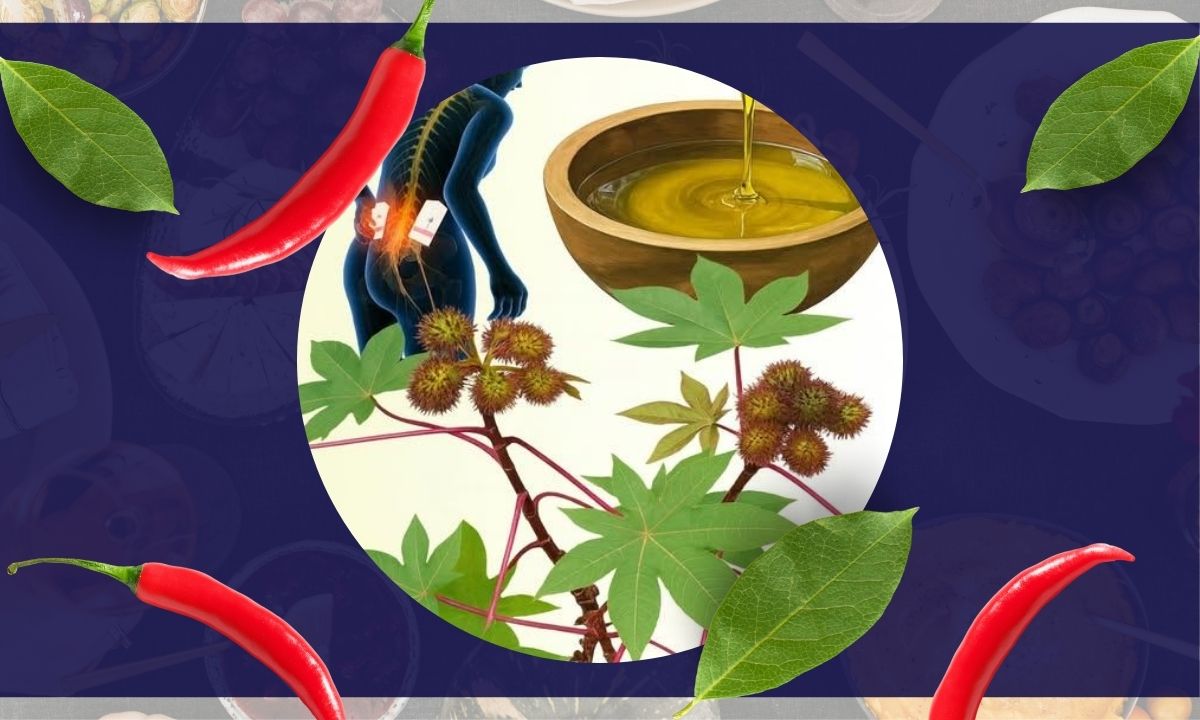
This article explains the traditional uses of the castor plant, how castor oil is prepared, and its benefits for pain relief, skin care, and overall wellness.
Explain
The castor plant (Ricinus communis) produces seeds that yield castor oil, a thick golden oil long valued in traditional medicine. While modern science recognizes castor oil’s anti-inflammatory and moisturizing properties, it should be used carefully, as raw seeds are toxic and only properly extracted oil is safe.
How to Make Castor Oil at Home (Traditional Method)
Ingredients
- Castor seeds (cleaned and dried)
- A mortar and pestle or grinder
- A pot for boiling
- Clean muslin cloth for straining
Instructions
- Shell and clean seeds to remove outer husks.
- Crush seeds into a paste using a grinder or mortar.
- Boil paste in water on low heat until oil rises to the surface.
- Skim off oil carefully and strain through muslin cloth.
- Store in a clean glass bottle, away from direct sunlight.
(Note: This is a traditional method. Commercially prepared castor oil is safer and more reliable for consistent quality.)
Benefits of Castor Oil
1. Pain Relief
- Warm castor oil packs applied to the lower back or joints may ease rheumatism, arthritis, and muscle pain.
2. Skin Care
- Moisturizes dry skin and reduces inflammation.
- Helps soothe minor wounds and cracked heels.
3. Hair Health
- Nourishes scalp, strengthens roots, and promotes hair growth.
- Reduces dandruff and dryness.
4. Digestive Support (Traditional Use)
- Historically used as a laxative, but should only be taken under medical supervision.
Practical Tips
- Always use properly extracted oil — raw seeds are toxic.
- For pain relief, soak a cloth in warm castor oil, place on affected area, and cover with a hot water bottle for 20–30 minutes.
- For hair, massage into scalp once or twice weekly.
- Store oil in a cool, dark place to preserve potency.
✅ In summary: The castor plant is truly “gold in the garden.” Its oil, when safely prepared, offers natural relief for pain, supports skin and hair health, and remains a valuable traditional remedy. However, it should be used wisely, and raw seeds must never be consumed.